
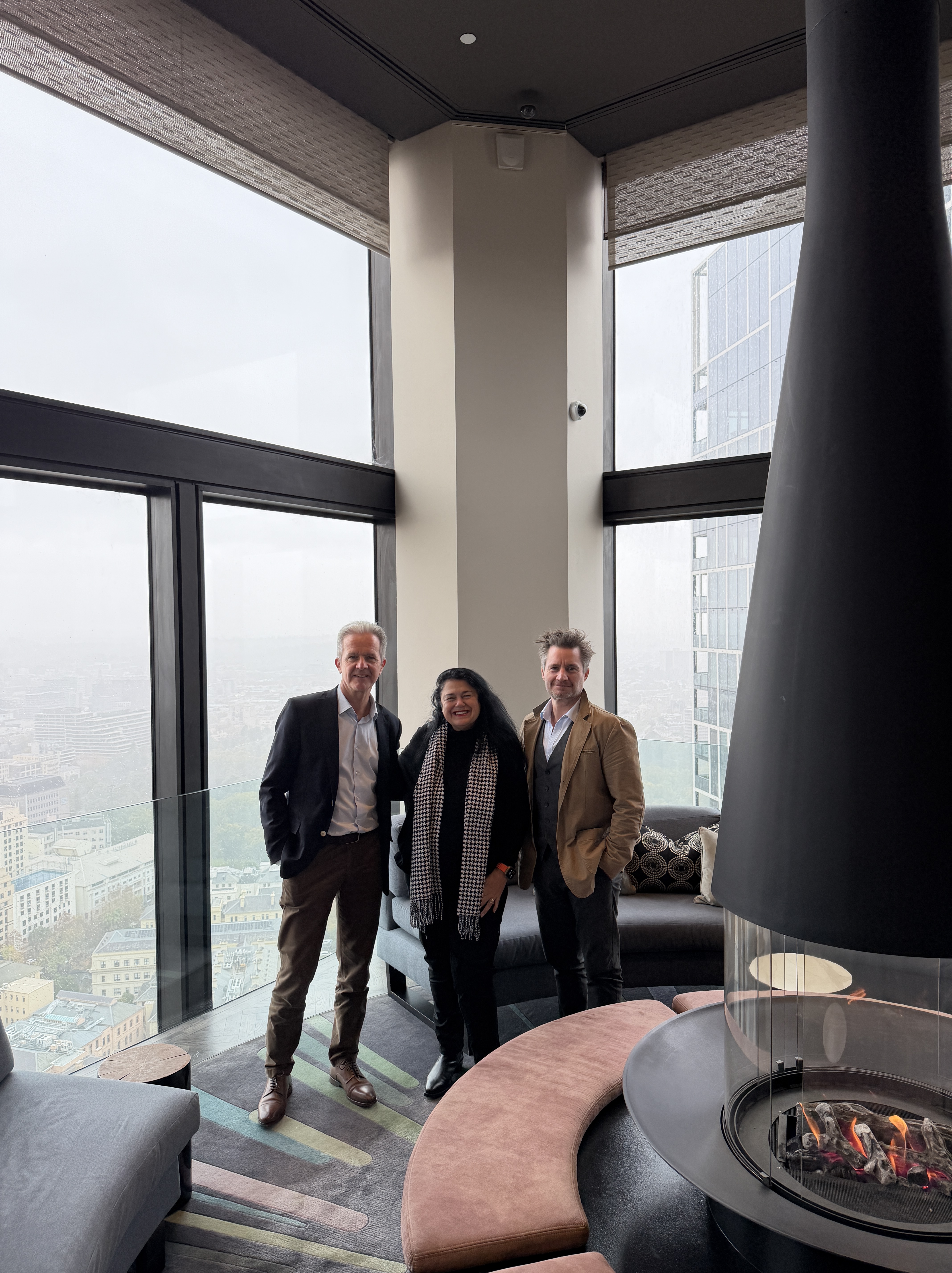
(L to R: Hervé Dantan, Petra Harmer-Shrowder, Laurent Valy)
I felt incredibly lucky to have an insight into the current world of Champagne whilst talking to Hervé Dantan – Chef de Caves / winemaker and Laurent Valy – Export Manager, Asia Pacific from Champagne Lanson whilst sitting around a log fire at the top of the Sofitel Hotel.
It was something of a coup to have a chance to speak with Hervé on his brief visit to Melbourne away from the vineyards of his home in France.
This interview increased my knowledge of the effects of climate change in the vineyards. Champagne trends and sales and the perceptions in France towards Champagne. Hervé joined Lanson in 2013, he mentioned that “Life changed because it’s very special to come into such a historical house at Champagne because you feel the pressure of the brand, the pressure of the sales team, the pressure of the vineyard, the pressure of the winery. But you need to stay quiet. And I think I have been helped by my history, myself, because I come from the vineyard, I come from people who are working with nature.”
Do click on the link and listen to the opening of my chat with Hervé.
Climate Change – This is certainly on many of our minds. Let’s hear now what the professional Champagne makers think of the effect of this in their vineyards. Herve said “Especially after 2003, we had eight different vintages that have been made and picked in August. So now, this is a trend. The vegetative cycle is shorter and we often pick grapes in August because the climate is warmer, because the vineyard is growing a bit faster, the bud burst is earlier, everything is earlier due to Global Warming.”
Hervé went on to say “So, vintages can be very good and sometimes can be very complicated. I think about some years that were difficult in the last decade, 11, 17, 23, that were very complicated because springtime and summer were very wet. So, we are in Champagne, France, when it’s wet, when you have leaves on the vines, you can have a lot of diseases like mildew, border mildew, and it can be complicated.
So, the viticulture needs to adapt a lot with this climate change, even if it’s not a disaster at all. I think we have shown now how it is interesting to fight against all these diseases, but we need to be very reactive in Champagne now and to experiment new techniques in the viticulture, to think about new programs for maybe having future varieties of Champagne that could be more adapted about this climate change. So, I’m sure that we have to be aware that we have global warming and not to say that nothing will change in the winery or even in the viticulture.”
We went on to discuss if there are changes in the making of Champagne and if yes, what?
It is beautiful hearing of the Champagne “sleeping.” Do listen to Herve’s remarks highlighting the history of Champagne Lanson dating back to 1760, more than 260 years ago. And the ‘house’ is still a family-run business, a house that is still owned by three Champagne families.
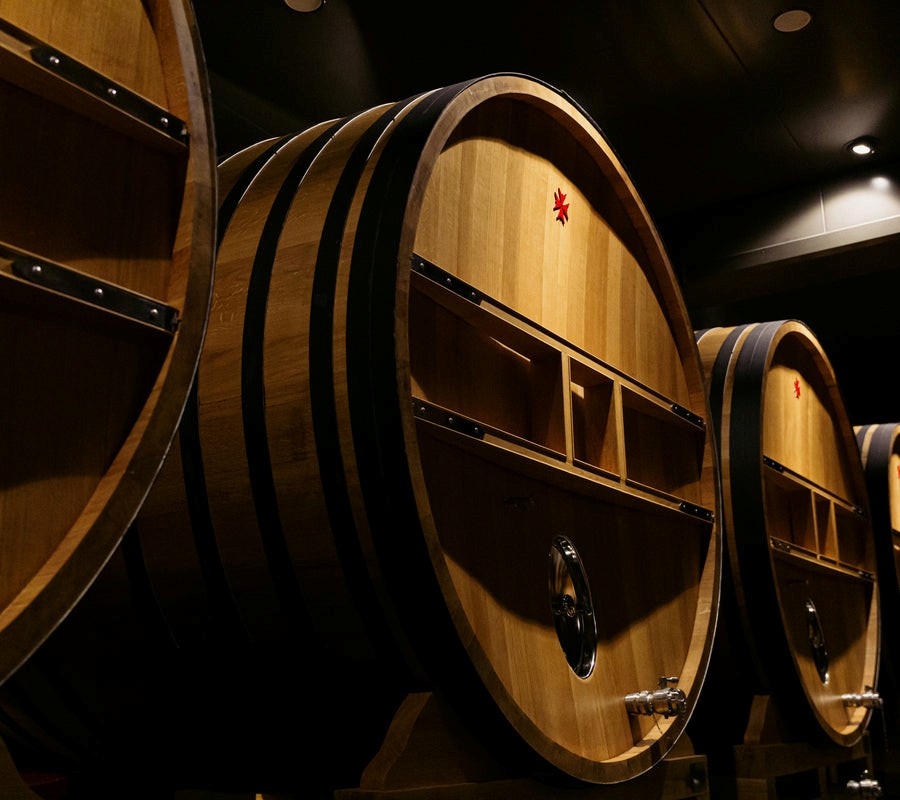
Hervé shared “We have our own winery that is located in Reims, in the heart of the town. Seven kilometres of breweries, 20 millions of bottles that are sleeping in the cool temperature. And yes, when you walk in all these galleries at Lanson, you can feel the weight of the past.”
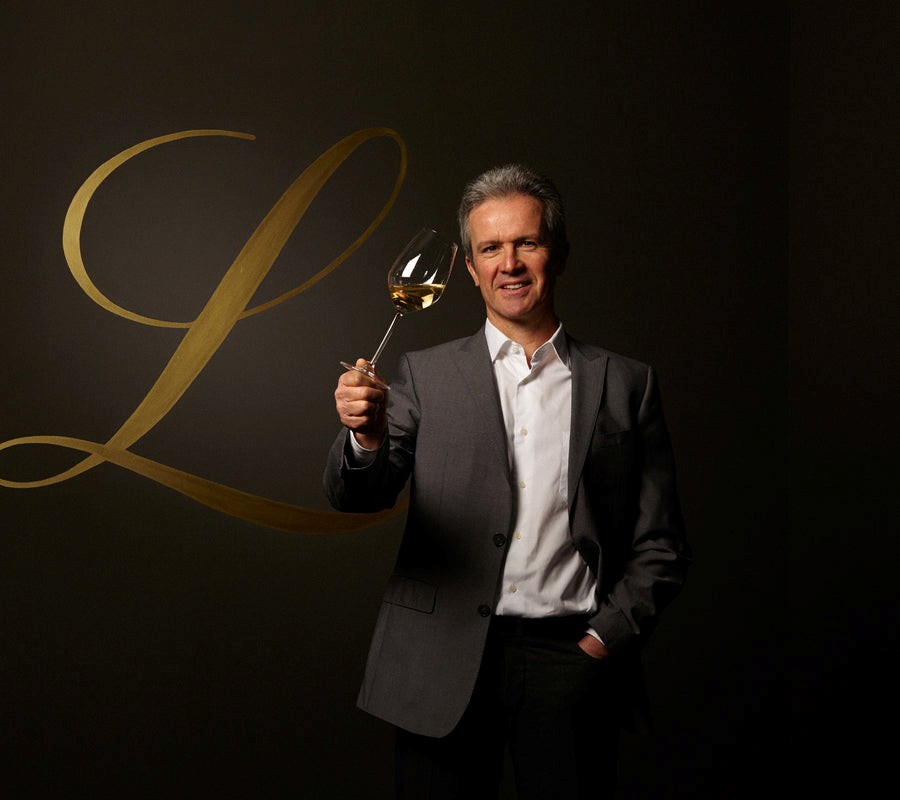
My next question was regarding new trends in the development of Champagne. It sounds like their clients are requesting more dry Champagne. Hervé shares the massive reduction in sugar content from 15 grams to between 6-8grams.
It is always interesting to hear how a company is doing and what market share they have. Herve was very honest in his reveal and Laurent added his feedback. They also discussed their competitors. So there are a few ways of saying it. If you think volumes, Hervé discussed some of the biggest producers being Moët or the LVMH Group. So Moët is producing between 30 to 40 million barrels. Vavclico around 20, 25. And Champagne Lanson are between 2.5 to 3 million barrels. Pomery and Tattinger are similar price-wise but there is no comparison in the category.
Next year they will be celebrating 50 years at Wimbledon with their tennis partnership, which seems to give them a competitive advantage as the UK is their biggest market. So to Hervé’s point, it’s like each house has got their own DNA and their own style.
Laurent Valy as export manager went on to discuss the Champagne Sales and with the global crisis in the world the sales in Champagne are not growing but they are stable. However, currently is very different to what happened in the Gulf War in the ’90’s when the Champagne sales went up. In France there is a crisis and the economic crisis has had an effect. It was interesting to learn that they expect sales to increase in France when they have the next Presidential election.
More perceptions in France were shared. There is an increase in the Prosecco consumption and many younger people are drinking less alcohol. The honesty was superb with the transparency Hervé was sharing about the consumers in France, how they are very supportive to the outsiders and they like the smaller producers.
For me and my many trips to Provence I haven’t yet managed to explore Reims and the Champagne region. Hopefully my next trip…
@ChampagneLanson
#LansonMelbourne, #HerveDantan, #LaurentValy


I'd really love to hear your comments.